


null Skip to main content
Beware of phishing attempts. Never share your recovery phrase with
anyone. Arculus will never ask you for it.

The Safest Way to Store Cryptocurrency in 2026

Posted In
Self Custody
Cold Storage

The safest way to store cryptocurrency in 2026 is in a cold wallet, where the private keys that control crypto stay offline. A cold wallet reduces exposure to exchange hacks, account takeovers, and online attacks because attackers cannot remotely reach offline keys.

Learn the risks of exchanges and hot wallets, how cold wallets work, and why Arculus makes secure self-custody simple.

Get Arculus and Secure Crypto
secure your crypto

Why Where Crypto is Stored Matters More Than Most People Think

A common pattern looks like this. Crypto gets bought on an exchange, the plan is to move it later, then something happens. A password gets phished. An account gets locked. A platform has an outage at the worst possible time.

Crypto storage is not only about convenience. It is about control.

If someone else controls the private keys, someone else controls the crypto. Exchanges can be useful for buying and selling, but keeping long-term holdings there means relying on a third party to safeguard access.

The Risks of Storing Crypto on Exchanges and in Hot Wallets

What is an Exchange Wallet

An exchange wallet is where crypto is held inside an exchange account. The exchange manages the keys and the security model. The user logs in, but the platform controls the infrastructure.

What is a Hot Wallet

A hot wallet is a wallet connected to the internet, usually a browser extension or mobile app. Hot wallets are convenient for frequent transactions, but online connectivity increases exposure to phishing, malware, and account takeover attempts.

The Main Risks in Plain Language

Hacks and Breaches

Exchanges and online systems are high-value targets because they aggregate large amounts of crypto.

Account Takeovers

If an attacker gets credentials, performs a SIM swap, or tricks a user into approving a malicious login, funds can be at risk.

Platform Failures and Freezes

Even without a hack, access can be interrupted by outages, withdrawal holds, or account restrictions.

Always-Online Exposure

The more a wallet depends on always-online access, the more it lives in the same threat environment as everything else on the internet.

What is a Cold Wallet, and How Does it Work

A cold wallet is designed to keep private keys offline, then use those keys to sign transactions in a controlled way. The keys do not need to be exposed to the internet to do the job.

How Cold Storage Changes the Risk Profile

  • In a hot wallet, keys can be exposed through device compromise, malicious approvals, or insecure backups.
  • In a cold wallet, keys stay offline. Transactions require physical access to approve the signing event.

Why Arculus is a Very Safe Way to Store Crypto

Arculus is built on a simple principle. Security should not require a complicated workflow.

3-Factor Authentication in Arculus, Explained Simply

  • Something you are: a biometric like Face ID or fingerprint
  • Something you know: a 6-digit PIN created in the Arculus App
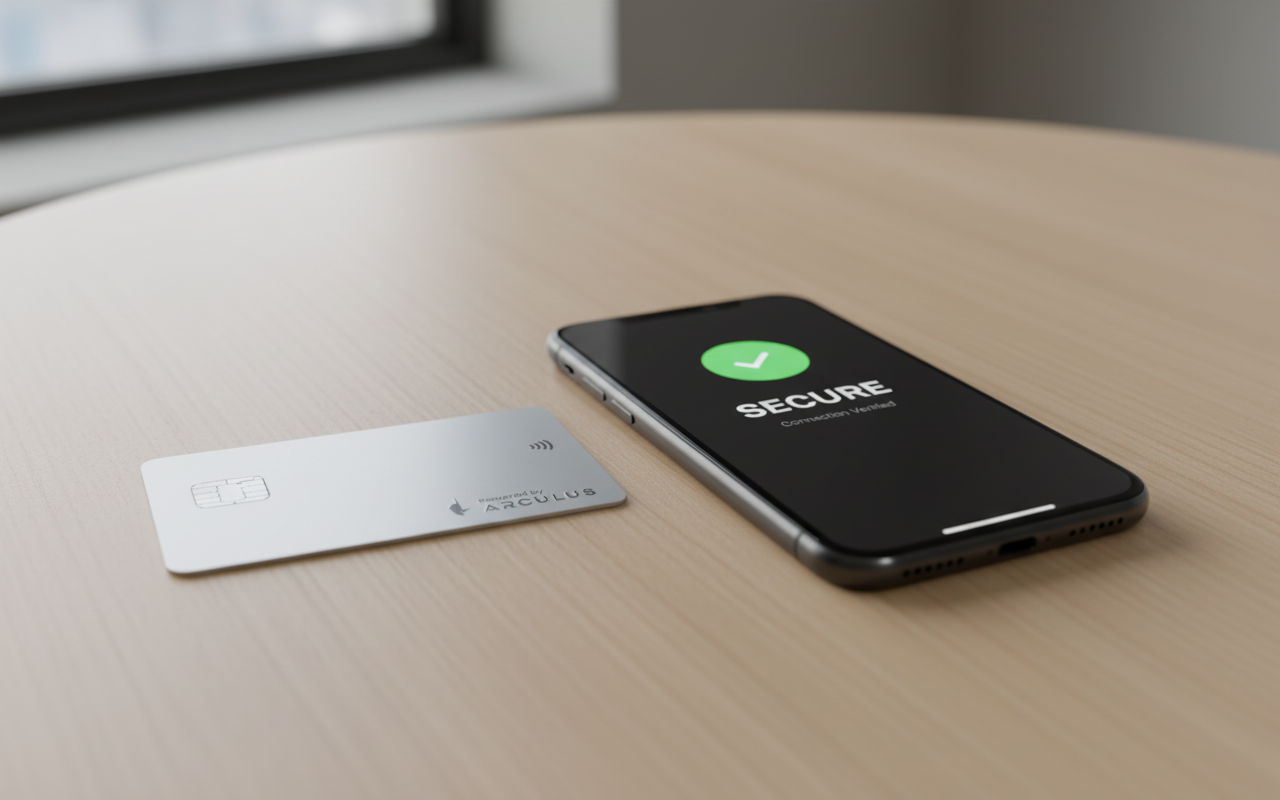
  • Something you have: the Arculus Card, tapped to a phone via NFC to approve transactions

Why This Matters in Real Life

  • If a phone is lost or compromised, that alone is not enough to move funds. The card and the PIN are still required.
  • If a card is stolen, that alone is not enough to move funds. The biometric and PIN are still required

How Arculus Compares to Other Ways to Store Crypto

Options can feel similar on the surface. Here is the practical view.

Feature Exchanges Hot Wallets Typical Hardware Wallets Arculus Cold Wallet
Details Online platform (custodial) Software-based wallet Physical device (offline) Metal card with secure element
Ease of Use
Security
Third-Party Control
Always Online
Web3 Access
NFT Support
Complexity Low Low High Low
Unique Advantage Fast trading access Easy for frequent use Strong offline protection Offline security + mobile-first + 3FA

Who Needs a Cold Wallet Right Now

Cold wallets are not only for experts. Cold wallets are for anyone who wants to reduce risk for long-term holdings.

Rules of Thumb

  • If crypto is meant to be held for months or years, consider cold storage.
  • If crypto is stored on an exchange for convenience or advanced trading, move the long-term portion to a cold wallet.
  • If crypto is stored on an exchange for convenience or advanced trading, move the long-term portion to a cold wallet.

A Practical Approach Many People Use

  • Use exchanges for buying and selling when needed
  • Use a cold wallet as the home base for storage
Arculus card stack

How to Get Started with Arculus in a Few Simple Steps

High-level Setup Overview:

  1. Get the Arculus Card
  2. Download the Arculus App (iOS or Android)
  3. Create a 6-digit PIN and enable biometric protection
  4. Create a wallet and record the recovery phrase safely
  5. Transfer crypto from an exchange or another wallet to Arculus

For the Full Walkthrough, Use the Beginner Guide:

Set Up a Cold Wallet for the First Time

Get Arculus and Secure Crypto

For the full walkthrough, use the beginner guide or get started right away.

Frequently Asked Questions

A cold wallet is widely considered the safest approach because private keys stay offline, which reduces exposure to online attacks.

For long-term storage, yes. A cold wallet reduces the risk of exchange breaches or account restrictions affecting access to holdings.

Many people use both. A hot wallet can support frequent activity, while a cold wallet is a better fit for long-term storage of the bulk of holdings.

A cold wallet is an offline crypto wallet that generates and stores private keys away from the internet, then signs transactions when physically present.

Arculus is designed to keep cold storage mobile-first by combining an app with a tap-to-approve card.